
Home Renovation in Dhaka: What Affects the Cost and How to Plan Your Budget
Introduction
Renovating a flat or house in Dhaka can feel overwhelming. Prices vary from contractor to contractor, work often takes longer than promised, and surprise expenses appear halfway through. The good news is that most of these problems can be avoided with proper planning. In this guide, we explain what really affects renovation cost and how to build a budget you can trust.
1. Scope of work
The biggest cost factor is simply how much you want to change. Repainting and replacing a few fixtures is very different from changing the layout, moving walls, redoing the electrical lines and replacing the flooring. Before asking for any quotation, write down exactly which rooms and which items are included.
2. Materials and finishes
Tiles, paint, false ceiling, cabinets, lighting and sanitary items can all be chosen at very different price levels. Decide early where you want to spend more (for example, kitchen cabinets that you use daily) and where you can save (for example, a rarely used guest room).
3. Electrical and plumbing work
Old wiring and pipes are the most common source of surprises. If your home is more than 10–15 years old, ask for the electrical and plumbing lines to be checked before finishing work begins. Fixing a hidden problem after the new tiles and paint are done is far more expensive.
4. Building rules and permissions
In many apartment buildings you need permission from the owners’ association or the building owner for structural changes, drilling hours and material movement. Confirm these first so work does not get stopped midway.
5. Timeline
A longer project costs more in labour and supervision. A clear schedule with milestones helps you avoid delay-related extra charges.
How to set a realistic budget
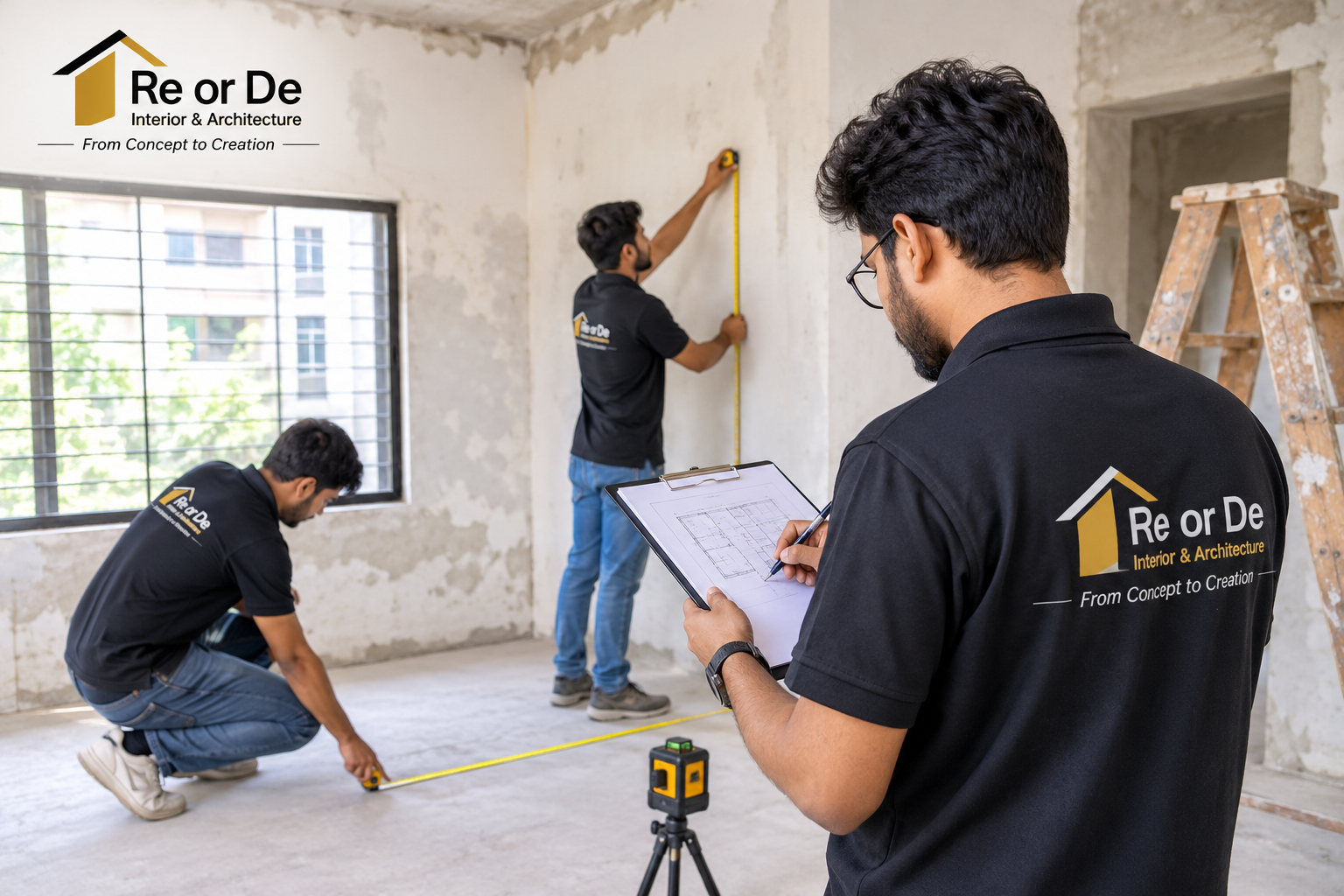
- Start with a site survey. Accurate measurements and a list of existing problems make the estimate much more reliable. Our Survey/Pre-design service is built for exactly this.
- Ask for an itemised quotation (BOQ). A single lump-sum figure hides what you are paying for.
- Keep a contingency. Many professionals suggest keeping roughly 10–15% of the budget aside for unexpected issues, especially in older buildings.
- Fix the design before work starts. Changing your mind during execution is the fastest way to exceed the budget.
- Phase the work if needed. Do the essentials first (electrical, plumbing, kitchen) and the decorative items later.
Common mistakes to avoid
- Choosing a contractor only by the lowest price.
- Starting work without a written scope and schedule.
- Skipping waterproofing in bathrooms, kitchens and balconies.
- Buying materials before the design is final.
- Not checking the contractor’s previous work.
Plan your renovation with Re or De
From survey to design to execution, our team handles the whole process so you know what you are paying for and when it will be finished. Learn more about our Renovation/Restoration service or contact us for a free consultation at +88 01842-135264.